The Story of the Painting "Yellow Angel"
· 3 min read
"The Yellow Angel"
The Artist's Intent Revealed
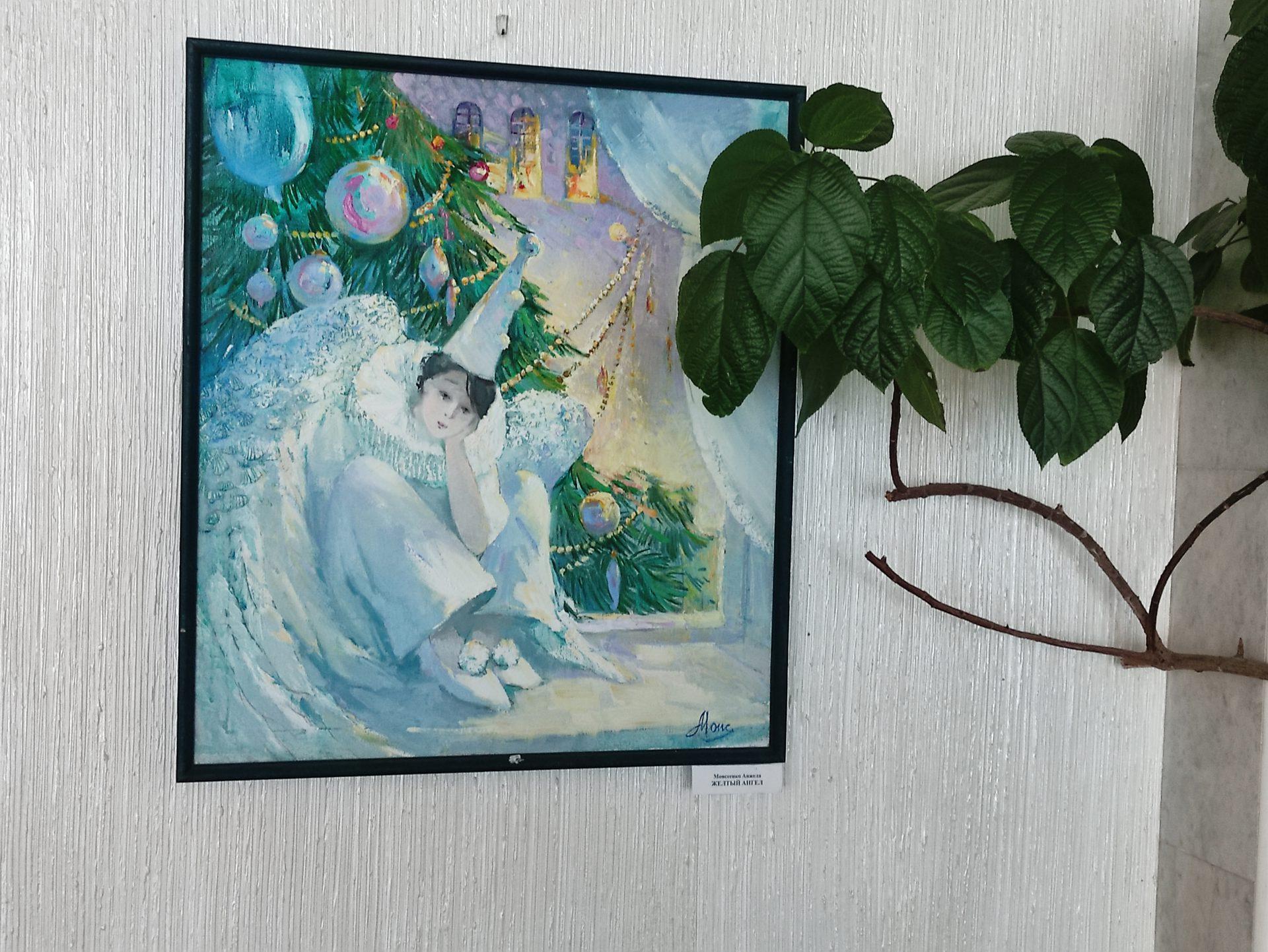
The painting "The Yellow Angel" is dedicated to the work of Alexander Vertinsky, a remarkable performer, poet and singer whose art was filled with delicate sorrow, theatricality, refinement and a special musicality. It is not simply an image of an angel beside a decorated fir tree, but a poetic reflection on Vertinsky's world, in which beauty dwells alongside sadness, celebration alongside loneliness, and deep human feelings hide behind an outward lightness.
At the center of the composition stands the fragile figure of an angel in light robes. The pensive face, the bowed head and the soft pose create a sense of stillness and inner contemplation. It seems the angel has paused for a moment amid the festive splendor to listen to music sounding somewhere within. His appearance has none of heavenly grandeur; on the contrary, he is remarkably human, tender and a little sad. It is this tone that links the image with Vertinsky's poetry and songs, in which behind the performer's mask one could always sense a vulnerable soul, a longing for an unattainable ideal and a desire to preserve beauty in an imperfect world.
The yellow of the title takes on a special, symbolic meaning. The golden shades shimmering in the tree's ornaments and the festive details recall the light of old theater lamps, the glow of candles and the atmosphere of a vanished era. It is the light of memory, in which the past goes on living and keeps its fragile charm. The Yellow Angel seems to belong to two worlds at once: the earthly one, full of celebrations and human emotions, and a loftier one, where feelings turn into music and poetry.
The decorated tree becomes an important part of the artistic concept. Its deep green, pearl beads and delicate pink-lilac ornaments create a fairy-tale, almost theatrical space. Yet the festive decor does not overshadow the angel's figure; on the contrary, it underscores his solitude and pensiveness. Behind the outward glitter another reality opens up: a world of private feelings, quiet confessions and memories that are felt most keenly at moments of general merriment.
The color scheme rests on a subtle interplay of cool blue, turquoise and silvery tones with warm golden and pink accents. The light figure of the angel seems to dissolve into the surrounding space, taking on airiness and a musical fluidity. Textured brushstrokes lend the painting particular expressiveness: the surface seems alive and vibrating, as if the color itself becomes a continuation of the melody.
This work conveys not only admiration for Alexander Vertinsky's art, but also an attempt to capture its very nature: the union of a stage persona with sincere human feeling. As in Vertinsky's songs, there is no direct narrative or single answer here. The artist invites the viewer to pause, look closely at the angel's face and feel what cannot be put into words: tenderness, a bright sadness, the charm of a passing time and a quiet hope for a miracle.
The Main Idea of the Painting
"The Yellow Angel" is an image of fragile beauty that stays with a person even when the celebration ends, the lights go out and time carries away whole eras. In dedicating the painting to Alexander Vertinsky, the artist seems to lead the viewer back into the world of his songs: a world of refined feelings, theatrical mystery and the human longing for the beautiful.
Here the angel becomes a symbol of Vertinsky's art itself: an unseen presence that warms the soul, awakens memories and helps us see poetry in life's quietest moments.
And perhaps this is precisely the painting's main message: true art is like an angel. It comes to us unnoticed, touches the heart and stays in it for a long time, turning sadness into beauty and memories into eternal light.
"The Yellow Angel"
oil on canvas on stretcher
80 × 70 cm
2020
Artist Angela Moiseenko